
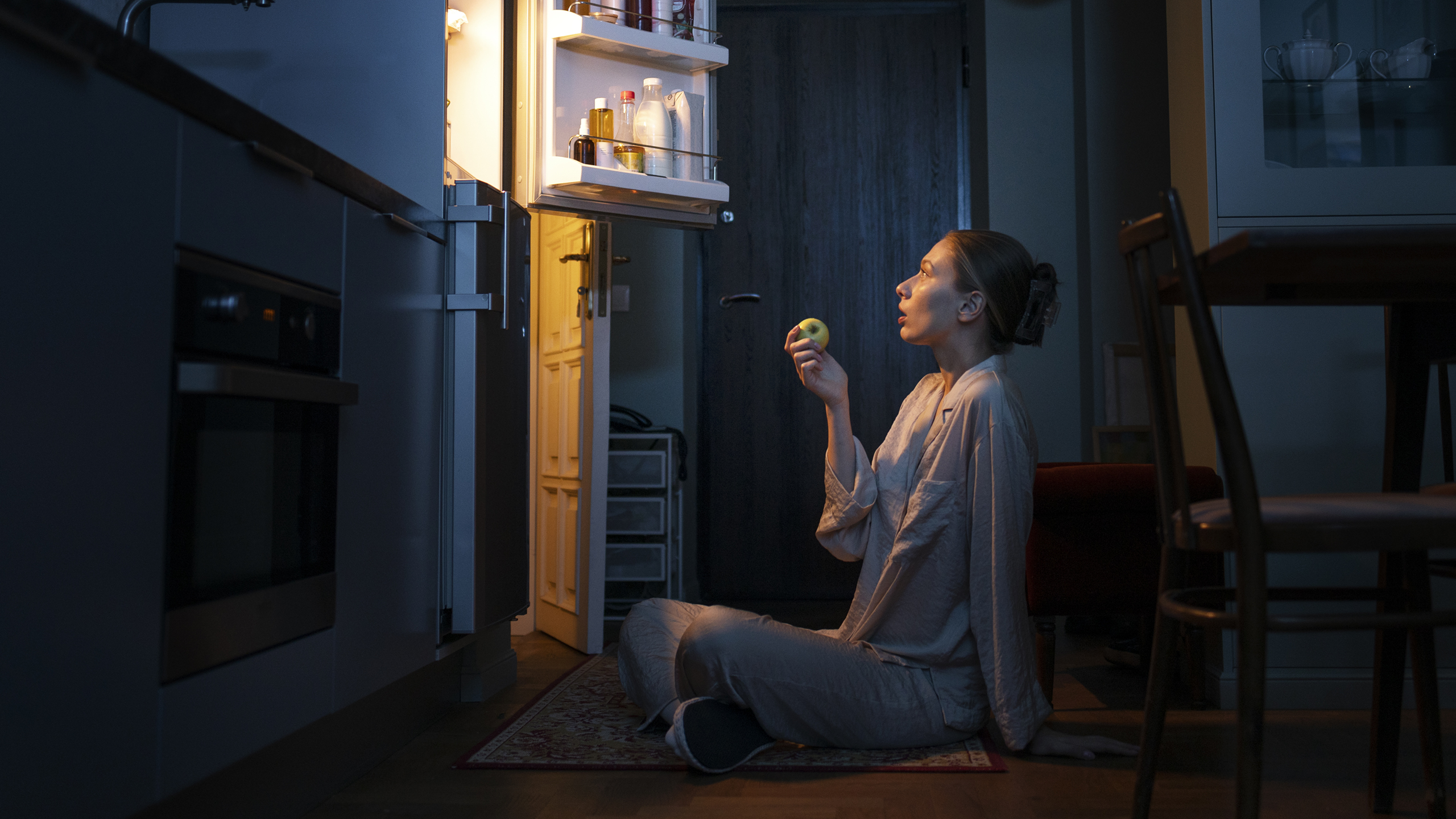
There’s a moment many people don’t talk about — the moment after dinner when the house gets quiet, the day finally slows, and suddenly the pantry feels magnetic. You’re not starving. You’re not even craving anything specific. You just… want something.
If this is you, you’re not alone. And you’re not doing anything wrong.
Evening and nighttime snacking is almost never about hunger. It’s about rhythm, regulation, and relief.
Let’s explore what’s really happening underneath.
Your Blood Sugar Rhythm Is Asking for Stability
When your meals are rushed, light, or irregular, your blood sugar dips in the evening. Your body responds by asking for quick energy — usually in the form of:
- carbs
- sweets
- crunchy snacks
- “just a little something”
This isn’t a lack of discipline. It’s physiology.
How Balance helps
Taking Balance before your meals slows glucose absorption and helps keep your blood sugar steadier into the evening. When your glucose curve is smoother, your cravings soften naturally.
Your Emotional Bandwidth Is Low
By evening, you’ve made hundreds of micro-decisions:
- What to say
- What to ignore
- What to prioritize
- What to let go
- What to respond to
- What to hold in
Decision fatigue is real. And when your brain is tired, it reaches for comfort.
Food becomes:
- a transition
- a reward
- a pause
- a moment of grounding
This is human. Not a flaw.
You Finally Have Space
For many people, late evening and nighttime is the first moment of the day that feels quiet. Your nervous system, after holding everything together, finally exhales.
And in that exhale, the urge to snack appears.
So What Do You Do?
You don’t fight it. You don’t shame yourself. You don’t “try harder.”
You support the rhythm underneath it.
Here’s how:
Choose a protein-forward dinner: Not heavy — just anchored. It keeps your blood sugar steadier.
Devolop a pre-decided evening routine: When you remove decision-making, you remove friction.
Look for hydration cues: Many evening cravings are actually your body asking for water.
Drink Unimate as an evening support (here are 2 decaf options)
A second serving of Unimate can help with:
- mood
- mental clarity
- the “transition” feeling
- reducing the emotional pull toward snacks
It’s not a suppressant — it’s a stabilizer.
Where Intermittent Fasting Fits In
Evening snacking often disrupts sleep and pushes your eating window later. A gentle intermittent fasting rhythm helps your body:
- regulate hunger hormones
- stabilize blood sugar
- reduce nighttime cravings
- improve sleep quality
You don’t need long fasts. Just predictable ones.
Unimate in the morning makes this easier by supporting satiety and mental clarity.
A Final Thought
Late evening and nighttime snacking isn’t a battle to win. It’s a signal to understand.
When you support your body with steadier rhythms — through Balance, Unimate, and predictable fasting windows — the urge softens. Not because you forced it, but because your body finally feels supported.